
Beyond Images: Three Books I Wrote
Beyond Images: Three Books I Wrote
Most people who discover my work know me through photography, digital art, mobile imaging, or visual experimentation. Images have always been one of my preferred ways of investigating reality—or perhaps questioning whether reality is as stable as it appears.
But before and alongside images, there have always been words.
Writing allows me to enter places that photography can only suggest. A photograph freezes an instant, while a book can stretch that instant, break it apart, enter the thoughts of the people inside it, and follow an idea until it becomes a world.
Over the years, I have written three very different books: a philosophical and introspective essay, a fantasy and science-fiction adventure, and a psychological thriller set beyond the boundaries of life and death.
Despite their differences, they share several recurring questions: Who are we when our memories disappear? How much of what we call reality is created by perception? Can imagination become a tool for understanding ourselves?
Here are the three books.
The Irreality Show
Wake up and create your new reality
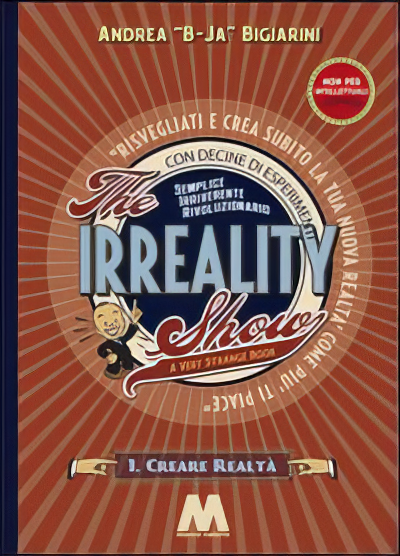
The Irreality Show is an essay about perception, identity, conditioning, and the fragile boundary separating inner experience from what we commonly define as reality.
The book invites readers to look beyond the habits and assumptions that shape everyday life. Work, relationships, social roles, memories, expectations, and fears often appear to form a solid and unquestionable reality. Yet much of what we experience is filtered through interpretation, belief, and personal history.
By metaphorically pulling back the curtain of the conventional world, the book explores the possibility that reality may be less objective and permanent than it seems. Changing our perspective does not simply change the way we observe life: it may also change the life we believe we are living.
At the same time, The Irreality Show is an accessible essay on dissociation from reality. It approaches the distance between perception, identity, and daily experience in language intended for everyone, making complex ideas easier to recognise and examine.
It is not a technical or academic manual. It is an invitation to observe the mechanisms of the mind, question automatic interpretations, and become more aware of the relationship between consciousness and reality.
I sette magnifici nani
Seven unlikely heroes and an interdimensional conspiracy
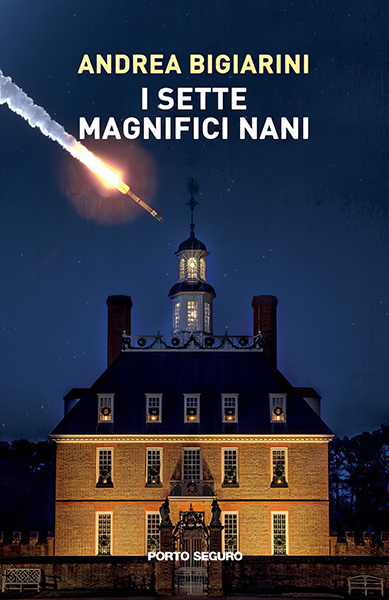
The life of Johnas Blackrain, an elderly, embittered billionaire, is disrupted when seven dwarfs with extraordinary powers suddenly enter his home.
Equipped with advanced technology, magical abilities, unpredictable personalities, and a considerable talent for sarcastic remarks, the seven dwarfs are attempting to stop an interdimensional conspiracy that threatens the survival of the planet.
What initially appears to be an absurd and unwanted intrusion soon becomes deeply personal for Johnas. Behind the conspiracy, he discovers the familiar face of a great love he believed he had lost, together with a dark figure connected to his past.
Forced to leave behind his isolation, Johnas joins the seven small but formidable heroes on a journey involving fantasy, science fiction, humour, mystery, and adventure.
The mission gradually becomes more than a struggle to save the world. It is also a journey through memory, regret, loss, and the possibility of rediscovering the value of life. At its centre lies a mystery that has remained unresolved for fifty years—and Johnas may be the only person capable of solving it.
Salve. Il mio nome era…
What remains of us when memory disappears?
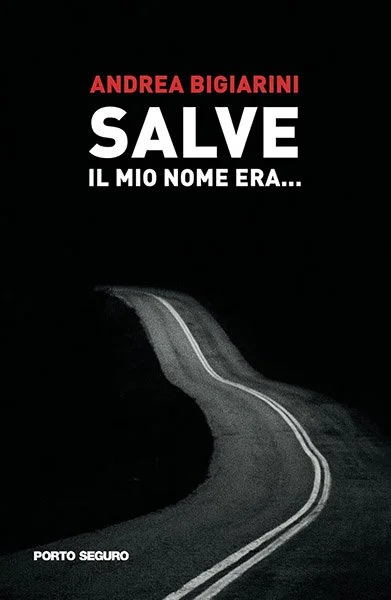
The protagonist of Salve. Il mio nome era… is a man who has died under mysterious circumstances.
He awakens without memories and without a clear identity. Unable to remember his name, his past, or the events that led to his death, he begins a journey through a hypothetical afterlife in an attempt to discover who he once was.
Was he a good person? A victim? Or perhaps a murderer?
His condition appears unusual even to the organisation responsible for managing souls and reincarnation. Known only as Mr P, he soon becomes involved in a conspiracy connected to the opposing forces of Good and Evil—a mystery that he may be uniquely able to resolve.
The novel combines psychological thriller, mystery, fantasy, and existential reflection. Beneath the investigation into the protagonist’s identity lies a more unsettling question: if our memories vanish, does the person we once were continue to exist?
The book also contains symbolic and philosophical references inspired by the Tibetan Book of the Dead, or Bardo Thödol. These references provide another interpretative key to the protagonist’s passage through death, memory, judgement, and transformation.
For this reason, the novel can be read on multiple levels: as a supernatural thriller, as a mystery concerning a forgotten identity, and as a reflection on consciousness, guilt, rebirth, and the unstable boundaries of the self.
Three books, one recurring question
At first glance, these books may seem unrelated.
The Irreality Show is an essay. I sette magnifici nani is a fantastic and interdimensional adventure. Salve. Il mio nome era… is a psychological and metaphysical thriller.
Yet all three explore the distance between appearance and truth.
Their characters—and, in the case of The Irreality Show, the reader—are invited to cross a threshold. Beyond that threshold, reality becomes less certain, identity becomes something that must be reconstructed, and imagination becomes more than an escape: it becomes an instrument of investigation.
Photography and writing may use different languages, but for me they often serve the same purpose. Both can reveal something hidden inside ordinary experience. Both can create worlds. Both can challenge what we think we know.
Sometimes an image asks a question.
Sometimes a book gives that question enough space to become a journey.