
BEHIND THE CHARACTERS - EPISODE 11
BEHIND THE CHARACTERS - EPISODE 11
The New Claw: Revolutionaries, Conspirators, and a Blues Song Against Ebenezer Halley
In the Three Kingdoms, there's an organization the government considers a threat, the press portrays as a terrorist movement, and its supporters simply call patriotic. Its name is The New Claw. Its members dream of overthrowing a political system they believe has become corrupt and restoring freedom to their people. But what do these revolutionaries have to do with Ebenezer Halley? And why have they decided to give him a piece of their mind in a blues song called Run, Ebenezer Run?
Imagine living in a kingdom ruled by a monarch who absolutely hates being contradicted.
Now add an enormously powerful adviser who goes by the title of Grand Incontestable, a political system in which every important decision seems to be made by the same handful of people, and a news media that tells citizens only what those in power want them to hear.
Then imagine somebody decides enough is enough.
That's how The New Claw was born.
At least in spirit.
A clandestine organization whose very name provokes wildly different reactions throughout the Three Kingdoms.
To some, it's a dangerous subversive movement.
To others, it represents their last hope for freedom.
To King Giostrino I, it's mostly an enormous pain in the ass.
Who Are the Members of The New Claw?
When I created The New Claw, I wanted to introduce something into the world of The Seven Magnificent Dwarfs that went beyond the usual conflicts between heroes and villains.
A political struggle.
The organization has its roots in the turbulent history of the Three Kingdoms, particularly the tensions surrounding Tinkthoy, the ancient gnome enclave caught up in the Wars of Reunification.
Its members come from different backgrounds: military officers, scientists, intellectuals, and people who no longer recognize the ideals upon which the union of the Three Kingdoms was founded in their present government.
They're not a regular army. They don't have a presidential palace, a government ministry, or an official press office.
At least not openly.
Rumors suggest that some sympathizers occupy influential positions within the military, intelligence services, and government institutions.
Even the prestigious Varda Academy, where the Empire's finest warriors receive their training, has come under royal suspicion.
The real problem is separating genuine intelligence from political accusations.
In the novel, Yul Bullonov initially regards The New Claw as a terrorist organization. Zeeno, on the other hand, openly defends its ideals.
Two characters.
Two completely different versions of the same reality.
Which, come to think of it, isn't particularly fantastic at all.
A Republic Instead of a Monarchy
The New Claw has a clear objective: to remove King Giostrino I and Folko Hartoor, the Grand Incontestable, from power and transform the Three Kingdoms into a republic.
This isn't simply a matter of changing the name on the palace door.
The revolutionaries oppose a system in which power appears to have become increasingly concentrated in the hands of a privileged few, betraying the ideals of peace and prosperity championed by the previous monarch, Oswaald IV.
There's also a detail I've always found particularly amusing: the Council of Contestables.
An institution supposedly created to allow citizens to challenge questionable government decisions.
Unfortunately, the most influential figure in the entire system calls himself the Grand Incontestable.
You have to admire the consistency.
The New Claw isn't simply fighting against a king. It's fighting against the idea that anyone should consider himself above the law, beyond criticism, or immune to accountability.
And that's where Ebenezer Halley enters the picture.
Run, Ebenezer Run: When Revolution Meets the Blues
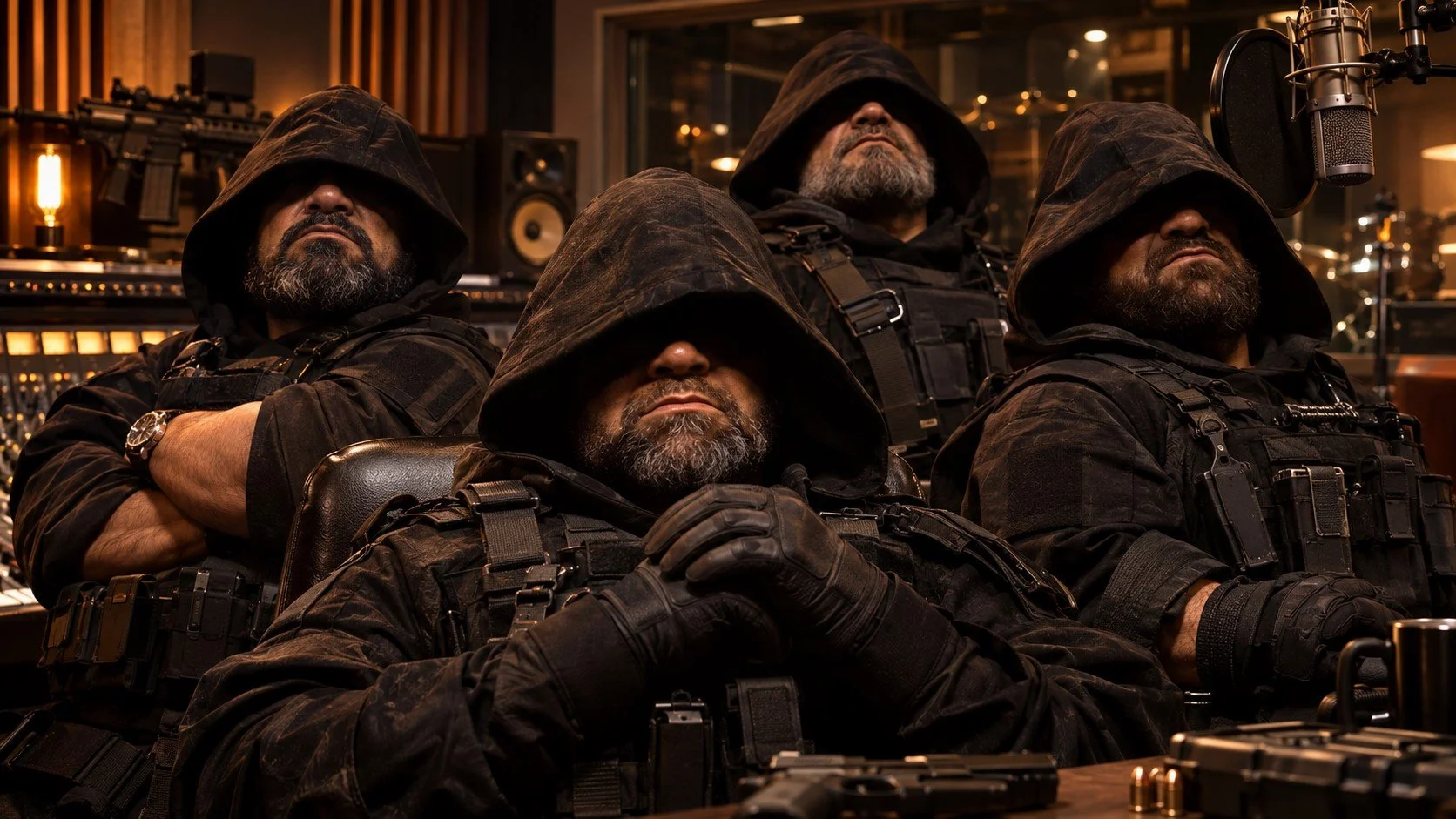
For The Blackrain Session, I imagined the members of The New Claw gathering not around a clandestine conference table, but in front of a microphone.
And what musical genre could better represent a group of rebels determined to expose arrogance, abuse, and corruption?
The blues.
Rough, earthy, ironic blues. The kind of music born in smoky bars, where a singer can turn a scoundrel into the subject of a ballad and make an entire audience laugh at his misfortunes.
The song is called Run, Ebenezer Run.
It tells a story set in an imaginary Chicago straight out of an old American blues record: a man convinced he's smarter than everyone else, a certain Miss Alma, a dangerously influential family, and a city where even judges and police chiefs seem to belong to somebody.
It's a deliberately exaggerated, satirical musical interpretation, not a literal reconstruction of events from the novel.
"Oh, Ebenezer, what have you done?"
The question keeps coming back, like an accusation carried by the rhythm.
Ebenezer has done something terrible.
Something very terrible.
And now he'd better run.
I liked the idea of The New Claw turning Halley into a musical target. Not because Ebenezer is the monarch they're fighting against, but because he represents everything these revolutionaries despise: arrogance, contempt for others, and the belief that anything can be obtained through deception or force.
In the novel, Ebenezer dreams of ruling the world.
In their blues song, the world seems to be coming after him.
A little reversal of fortune that I find particularly entertaining.
Even Revolutionaries Need to Sing
I didn't want The New Claw to become a gathering of flawless heroes.
A clandestine organization is made up of individuals, with sincere convictions, personal ambitions, contradictions, and inevitable rivalries.
Their struggle is about freedom, but the novel also raises a more uncomfortable question:
Will those who fight against power behave any differently when they finally possess it?
That's a question I'd rather leave unanswered.
Musically, however, I wanted to give The New Claw one particular satisfaction.
The opportunity to make fun of a man who considers the rest of humanity little more than a collection of idiots.
Their blues isn't a political manifesto.
It's a collective act of mockery, a musical story in which a powerful man suddenly discovers how unpleasant life can become when he's the one being chased.
And I'm quite certain that Ebenezer Halley wouldn't appreciate Run, Ebenezer Run one bit.
He'd probably order every copy of the record confiscated.
Then have the musicians arrested.
And possibly the recording engineer too.
But knowing The New Claw, I suspect somebody would already be working on their next single.
Listen to The New Claw — Run, Ebenezer Run
An irreverent, satirical blues song that transforms Ebenezer Halley into the unfortunate protagonist of a tale of arrogance, revenge, and impending disaster, from The Blackrain Session by GNOME RECORDS.
Discover The Seven Magnificent Dwarfs on Amazon
Behind the Characters — Exploring the stories, personalities, and music of the characters from The Seven Magnificent Dwarfs.
Andrea Bigiarini